
HackTool:Win32/CheatEngine is the detection name assigned to specific threats exhibiting identical malicious behavior, as identified by antivirus programs.
This category of threat is considered harmful and capable of executing undesirable actions on the compromised computer.
Your antivirus has alerted you of this threat because it discovered the specific malware on your computer during the program's system scan.
These detection warnings should not be taken lightly since it means that your computer is vulnerable and can be exploited by malicious actors.
You should take appropriate actions once your antivirus software notices these types of threats on your device. It is always best to get rid of it before it can do much harm to the computer.
Impact of HackTool:Win32/CheatEngine on the system
These threats are often acquired through spam emails, infected websites, or by clicking on a link in an email. Once it is installed on the computer system, HackTool:Win32/CheatEngine will begin to spread across your PC via Windows System files.
Hackers may be able to access all of your data on the computer and take over its operation once they have been deployed on the system.
Threats like these should not be allowed to remain on the computer for an extended period because they may result in irreparable harm.
Users who have their computer infected with the HackTool:Win32/CheatEngine threat will most likely face the following issues:
- Unexpected issues with the internet connection and certain programs.
- The computer experiencing freezing and performance slowdowns.
- Having trouble accessing or opening documents and files.
- Unwanted pop-up advertisements appear while browsing the internet.
- Increased CPU consumption and the computer experiencing overheating.
These kinds of threats are particularly risky since they can be used to attack unsuspecting users online by stealing their financial information, privacy passwords, and other important data.
HackTool:Win32/CheatEngine Removal Instructions
The methods provided below will assist you in removing the HackTool:Win32/CheatEngine detection.
Removing malware from the system should be thorough and carefully executed; therefore, please follow every step provided.

We made the instructions below easy to understand so non-tech-savvy users can still remove the computer threat without needing help from tech support or a computer technician.
Method 1: If HackTool:Win32/CheatEngine was detected as a software
The steps below are for if the detected threat is a part of a software or is a software then users will have to uninstall the said program.
Your antivirus detection results would have shown the exact file and its directory to know if it is part of a program or not.
To remove the detected HackTool:Win32/CheatEngine malware from your computer, we have provided two ways to do so: one is through normal uninstallation, and if that does not work, we also provide an advanced uninstall method to make sure it will be removed without issues.
Remove HackTool:Win32/CheatEngine via Control Panel
The most common way to remove the trojan virus from your computer is to uninstall the program through the Control Panel. You may view all of your installed apps as well as the developer's name in the list of applications.
1. From the Windows search bar at the bottom of your screen, search for Control Panel and click the result that matches the same application.

2. You will see different options, such as System and Security, as well as User Accounts. But what you want to click is the Uninstall a program under the Programs section. Depending on your Windows version, hovering over the uninstall section will be relatively the same.
 3. Now that you are on the Programs and Features page, it will show you all the installed programs. There will be filters you may want to use, such as viewing them in lists with details such as the publisher, version number, and when they were installed.
 4. Right-click the program that was detected as HackTool:Win32/CheatEngine and click Uninstall to get rid of it (We will be using Adaware as an example). It will then proceed to remove the application, or you will be presented with an uninstaller that will guide you to remove it; either way, it will be removed.
 There is a chance that the program may not be uninstalled successfully, and when that happens, it is important to use the power of an uninstaller program such as Revo Uninstaller.
It is widely known to be enough to remove malicious programs that are evading uninstallation. If you encounter such an issue when proceeding to uninstall the app, you may utilize the uninstaller to do the job for you.
Remove HackTool:Win32/CheatEngine via Revo Uninstaller
For computer users who are not sure of what to do. You may resort to using Revo Uninstaller since it is much more effective and easy to use. Revo Uninstaller is a handy tool for Windows users.
This uninstaller not only removes programs from the computer but also deletes their changes from the Windows Registry, Host File, etc. Following the steps below will guide you on how to install and use Revo Uninstaller to get rid of the HackTool:Win32/CheatEngine detection.
1. Click the button below to proceed with installing Revo Uninstaller on your computer since we have made an in-depth guide on how to use it on the following page. On the other hand, you can also head over to Revouninstaller.com and download it from there.
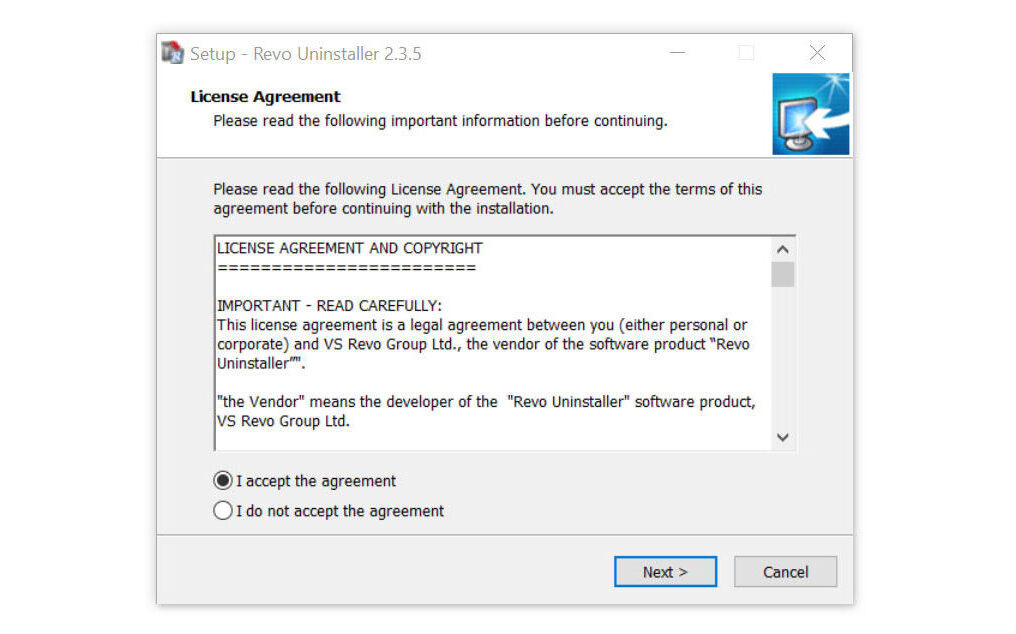
2. After the setup file (revosetup.exe) has finished downloading, run the installation wizard, read the license agreement, and click agree to proceed to the next step of the installation. Follow the procedure and wait until the installation of the software is complete.
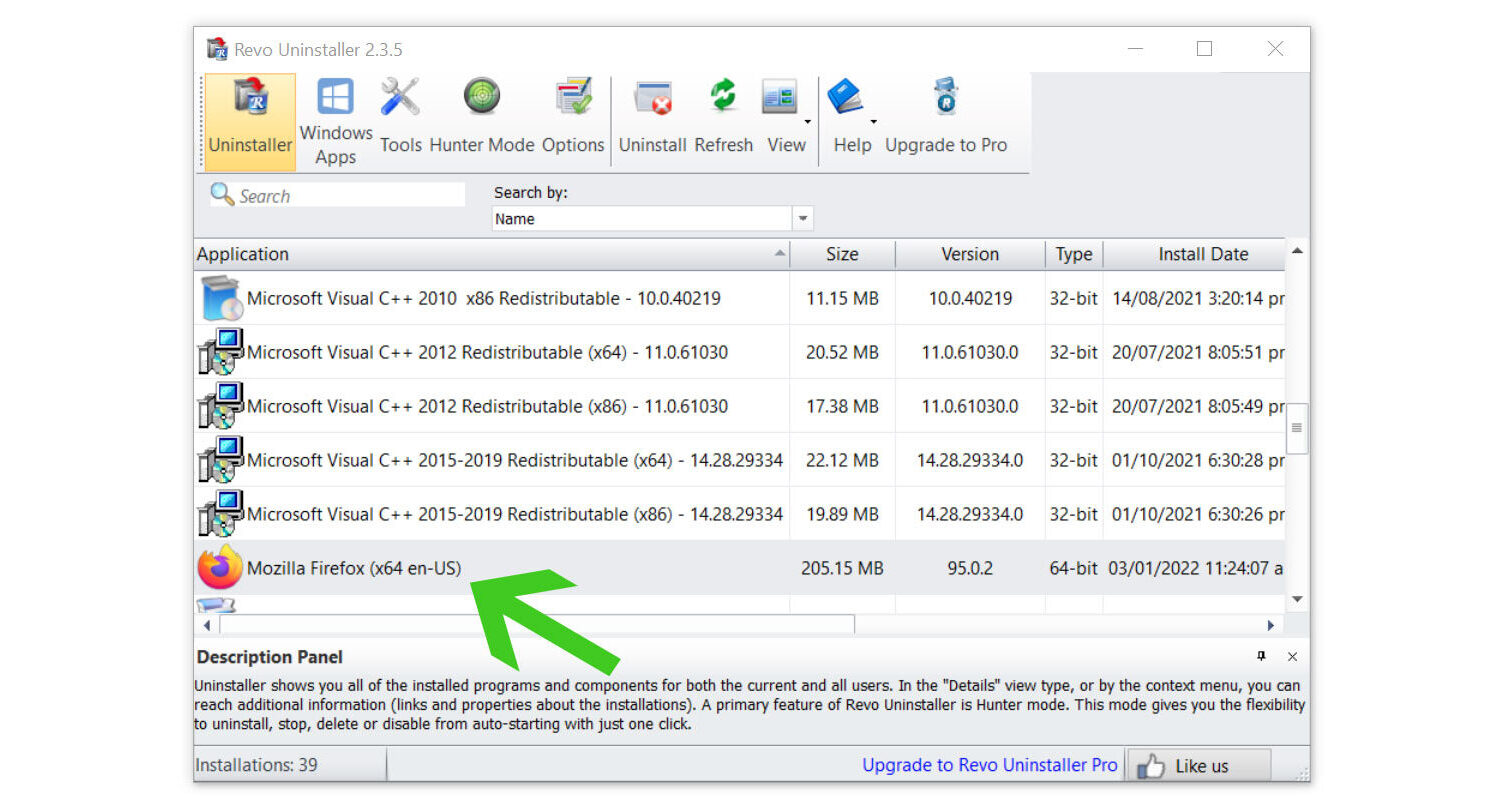
 3. Once the software has launched, find the harmful HackTool:Win32/CheatEngine detection and double-click the program to uninstall it.
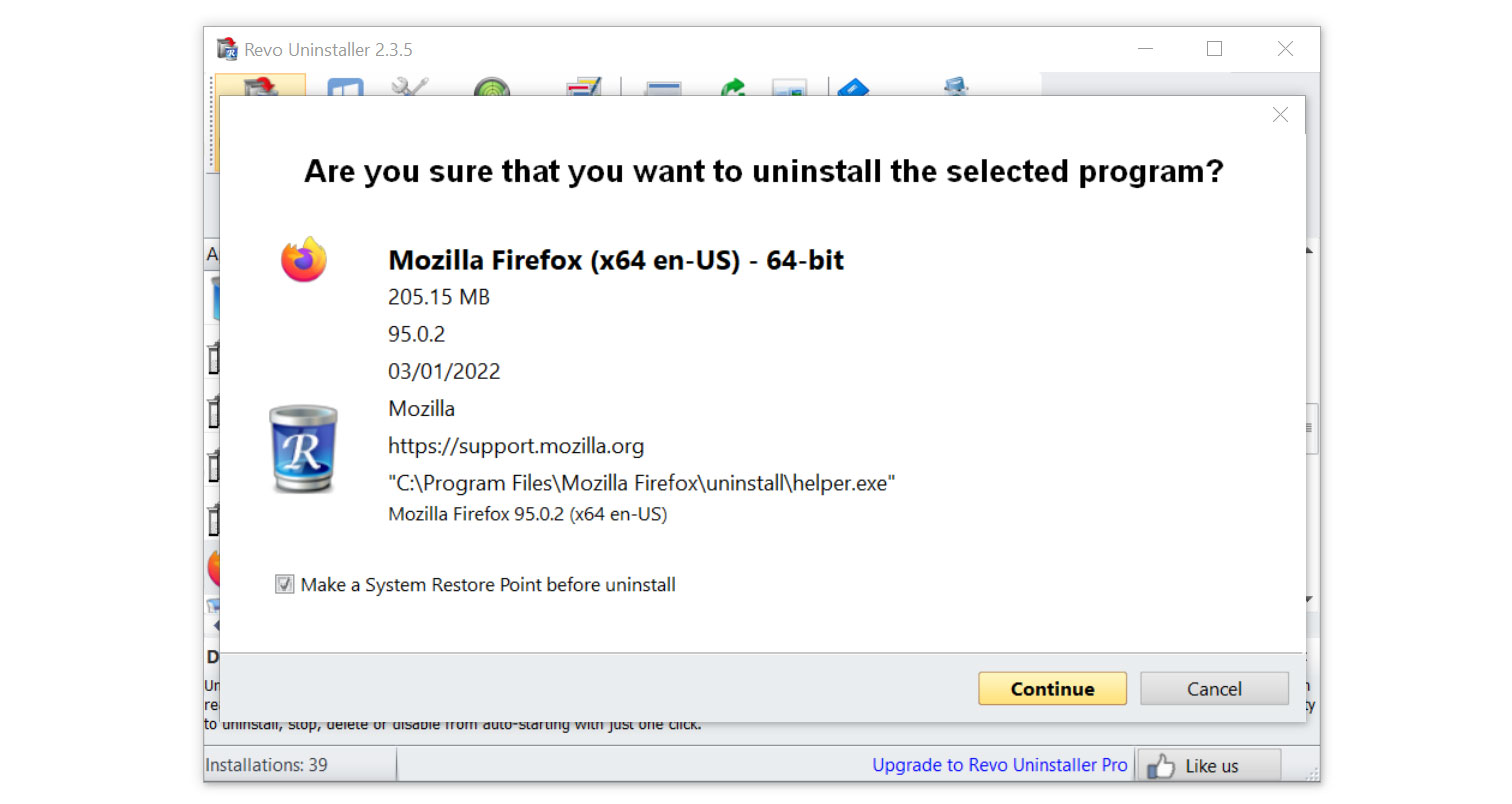
4. Click on the Continue button and follow the procedure to start uninstalling the detected HackTool:Win32/CheatEngine threat. It is also advised to make sure that a System Restore Point is made before the uninstallation, just in case. (We will be using Firefox as a demonstration.)
5. You will be prompted to choose a scanning mode. From the three options available, select Advanced mode, then click Scan.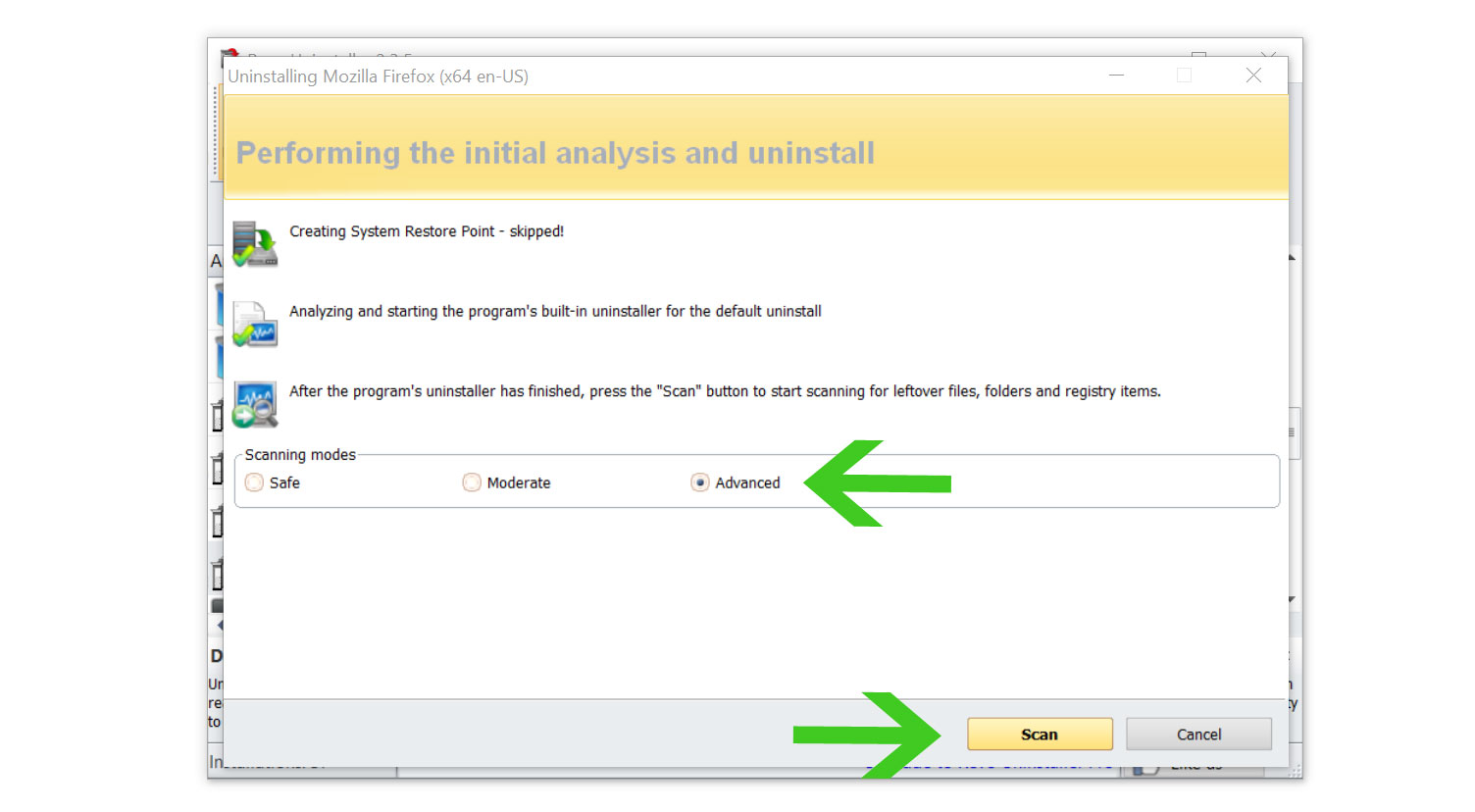 6. A window will pop up and show all of the leftovers and changes made by the uninstalled program. Click the Select All button and hit Delete to remove the leftovers found in the Windows Registry.
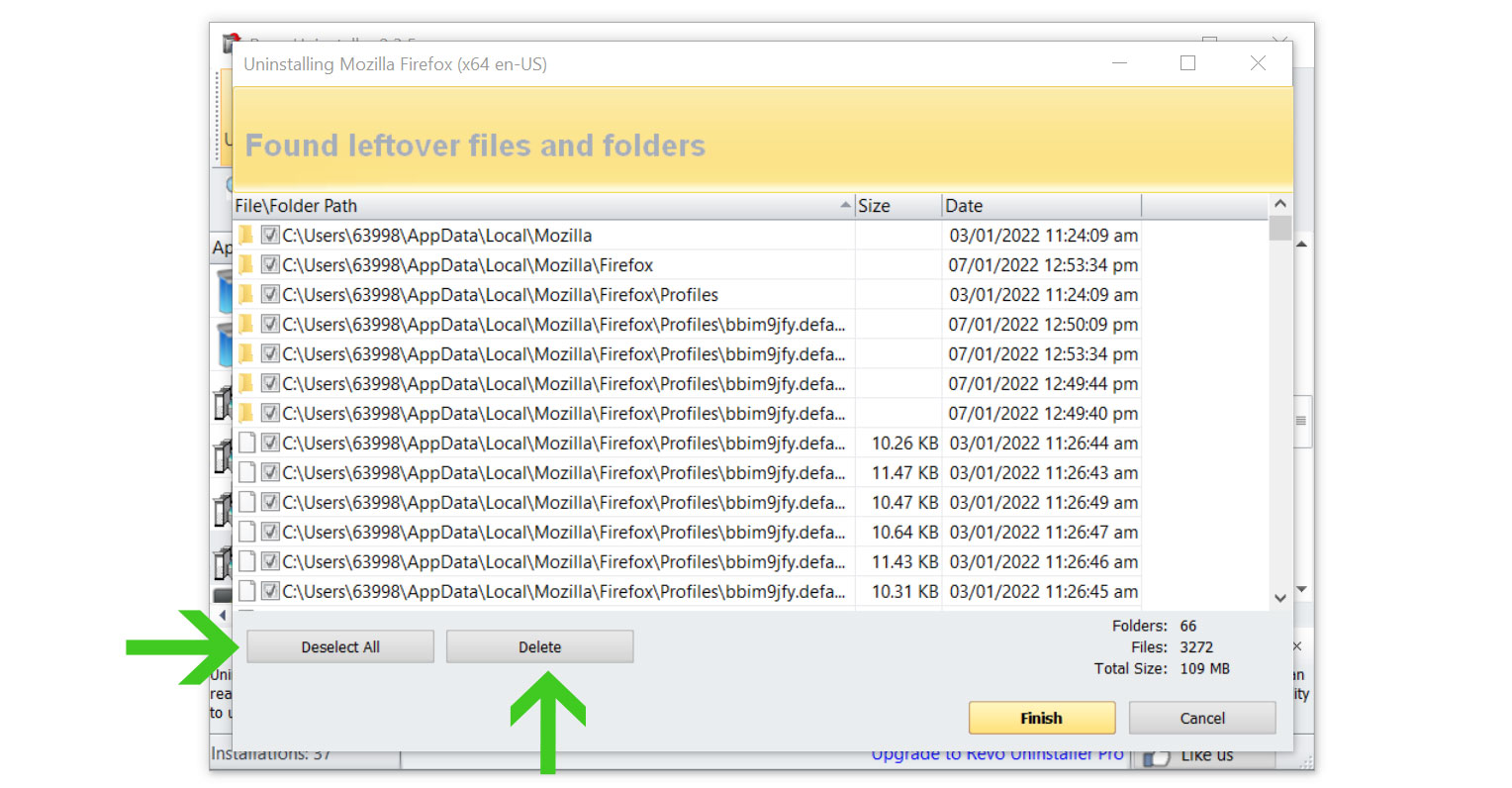
Once the window closes, you have successfully removed the detected HackTool:Win32/CheatEngine from your computer system.
Method 2: If HackTool:Win32/CheatEngine was detected as a single file
There is a chance that the detected HackTool:Win32/CheatEngine may not be an installed Windows program but rather a single executable file that is hiding in the computer. If this is the case, then you can remove it by locating the source of the file and deleting it from there.
Please follow the instructions below to find and delete the detected HackTool:Win32/CheatEngine threat manually from the computer.
1. When the trojan virus is causing your computer to overheat, launch task manager by simultaneously pressing the Ctrl, shift, and Esc buttons. Another option is via the Run program by pressing the Windows key and R, then typing taskmgr.
2. Check the antivirus results to determine the location of the detected HackTool:Win32/CheatEngine file. Then, go to the reported directory and delete the malicious file that was found there.

If the file refuses to be deleted because the process is running as well as if certain programs are preventing it from being uninstalled, simply enter Windows Safe Mode and delete it from there.
Before doing so, please remember the directory where the detected HackTool:Win32/CheatEngine threat is located because Safe Mode prevents non-essential files from running on the computer.
To boot into Safe Mode, first, open the system configuration by pressing Windows Key + R button then type "msconfig.exe".

Once the System Configuration window appears, click Boot next to General then check the Safe Boot from Boot options. Below that, tick the Network option to allow internet within the Safe Mode then click Apply, once everything is done and the computer should be restarted into safe mode.

After booting into the said mode, go to the directory where HackTool:Win32/CheatEngine is located and delete it. It should be able to be deleted now that the configurations preventing it from being removed are blocked in Safe Mode.
Method 3: Scan with powerful malware removal software
The HackTool:Win32/CheatEngine detection may be hard to delete and for users who are not knowledgeable about their technology, it is best to utilize a program dedicated to removing such threats from the computer.
For these virus threats, we recommend running a full system malware scan with Malwarebytes Anti-Malware. This program is widely known and recognized by security experts when it comes to removing viruses from the system.
Remove HackTool:Win32/CheatEngine with Malwarebytes Anti-Malware
We have also been using this software on our systems ever since, and it has always been successful in detecting viruses. It has blocked many known computer threats as shown from our tests, and we assure you that it can remove the HackTool:Win32/CheatEngine detection as well as other malware hiding on your computer.
 Not to mention, it is free to use and does not come at any cost to remove the viruses it finds on your computer.
To use Malwarebytes and remove malicious threats from the computer, follow the steps below:
1. Download Malwarebytes by clicking the button below, as we have made an additional and in-depth tutorial on how to use it. Otherwise, you may go to their official website via Malwarebytes.com (Avoid misspelling as it may lead to scams).
Download Malwarebytes Anti-Malware
2. Visit their download section and start a Free Download to begin installing the software on your computer. 3. Once the Malwarebytes setup file (MBsetup.exe) has finished downloading, open the executable file in File Explorer, then right-click the setup and select run as administrator to give the highest system authority and make sure Malwarebytes is installed correctly.
 4. Make sure to carefully follow the installation setup wizard's instructions and provide the relevant information it requires. You will be prompted with questions such as Personal or Business Use, Email Address, and others.
 5. From the application's home screen, go to the scan tab and begin running a system scan. This will scan the whole computer, including memory, startup items, the registry, and the file system. This is done so that not only the HackTool:Win32/CheatEngine trojan but also other malware hiding in the system will be detected.
 6. Since it can take a while, you should either relax and wait for it to finish or find something else to do. The length of the scan depends on the size of the files you have and the hardware capabilities of your computer. Here are some ways to make scanning faster.
7. Once the scan is finished, Malwarebytes will show the malicious viruses and threats it found on your PC. HackTool:Win32/CheatEngine will show up on the detection results, and it will show up in a different threat name such as TrojanCrypt.Generic, and many more. 8. Select all the detected files from the report and click the quarantine button to remove the malicious items from the computer into the protected safe quarantine zone of the anti-malware program so that they would not affect and do malicious actions to the PC again.
 9. After placing the virus files in the program’s quarantine, it may prompt you to restart the computer to finalize the full system scan procedure. Please restart your computer if prompted, as it is essential. After the restart, Malwarebytes will open and display a message that the scan was complete.
Note: Don't forget to delete the quarantined files afterward.
Simply quarantining the malware files is not enough to make sure they are completely removed. This is a very common misconception: once you click the quarantine button, it is all good and gone.
But, while its effects and harmful activities are halted, the malware is still in the system, only placed in the anti-malware program's quarantine folders. To completely remove it from the computer, go to Detection History from the home screen, select all Quarantined items, and click Delete.

You have successfully removed the HackTool:Win32/CheatEngine detection as well as other hidden threats on your computer. Rest assured they would not resurface again since Malwarebytes offers a premium trial for 14 days, so you could take advantage of it for free and prevent malware from infecting your system.
While the detection and removal of malware is free for Malwarebytes, the premium versions include real-time protection that ensures your computer is safe all the time. Although we encourage you to use the premium trial, you are free to purchase the full version if you find it useful.
The program is an anti-malware that removes harmful threats like trojan horses, worms, stealers, miners, keyloggers, and many other forms of malware and computer viruses.
We suggest Malwarebytes if you are looking for a removal tool and as a second opinion scanner, but if you want full-fledged antivirus software, we believe that the built-in Windows Defender is sufficient for computer security, or if you want something with a more sophisticated system and better protection: Kaspersky Free.
If you choose to uninstall Malwarebytes, you may suddenly see that Windows Defender Real-Time Protection is turned off. This is a common issue that users may face when uninstalling the software. To fix this issue, you may refer to this article.
Alternative: Kaspersky Free Antivirus
After removing the HackTool:Win32/CheatEngine detection virus and other malicious threats, you may want to install antivirus software to protect your system against malware.
More importantly, running an additional scan with a different program's threat database will alert you to hidden Trojan viruses and rootkits that were not removed from the prior scan with Malwarebytes. Kaspersky is a widely known antivirus software that has been on the market for as long as the field of cybersecurity has existed. It is acclaimed by professionals in the field and is one of the most effective antivirus programs available. With its advanced internet security protection, it can also remove additional malware from the computer.
What is the difference between anti-malware and antivirus? Anti-Malware software is designed to specifically remove malware and its variants. In addition, it employs heuristic-based detection by picking up harmful code from files.
On the other hand, an antivirus uses signature-based detection, which examines data for attacks to protect users from dangerous viruses, including keyloggers, loaders, worms, trojans, and others.
Malwarebytes and Kaspersky are identical, but Kaspersky is a better overall program since Malwarebytes' main purpose is to remove malware, but Kaspersky has been known for comprehensive computer security protection ever since. Based on our experience removing malware, when two different programs are used to scan, various threats are identified by one software but not by the other. Given that their threat databases differ from each other, it might be able to capture harmful viruses, rootkits, and trojans that Malwarebytes has missed.
Please be aware that if you decide to use Kaspersky, you should first uninstall Malwarebytes because having both security programs installed will cause a conflict. If you choose to do so, please remove Malwarebytes first, as it is essential to do so before we get started.
1. Click the button below to start downloading Kaspersky Antivirus on your computer. On the following page, we have provided clear details on how to install it on the computer. On the other hand, you may go to their official website by searching for the software on your web browser or typing Kaspersky.com (Beware of misspellings since cybercriminals typically use these as exploits to redirect users to malicious webpages).
2. Go to the download page for Kaspersky Free Antivirus. Before clicking download, you will be prompted to choose your continent and where your country is located. This is very important, and you should not choose a different country because you will be met with a "Not supported in your region" message during installation. 3. Once you click download, a setup file (startup.exe) will be downloaded on the computer. After it has finished downloading, open its file location, right-click the executable file, and then select Run as administrator. This will ensure that Kaspersky's installation will be smooth and will not result in certain errors.
 4. The Kaspersky installation wizard will launch, and you can then proceed to install Kaspersky Free by following the setup instructions. If a UAC prompt appears, simply accept it and proceed with the installation.
 5. Please be patient while Kaspersky is being installed on your computer. The speed and length of the installation process will depend on your computer's specifications. Kaspersky also mentioned that sluggishness or dark displays during the installation of their program are normal and should not be worried about.
6. To use the antivirus program, you must first create an account on the sign-in page that appears after the antivirus application has been successfully installed on the computer. If you're looking for the sign-up button, simply enter your email exactly as it appears; if you don't already have an account, one will be created for you. 7. Kaspersky will ask you to decide which plan to use. It will be either the Standard version or Kaspersky Plus. In this case, the standard version is all you need for now. If you want to try the premium version of Kaspersky, you may opt for Kaspersky Plus to try the features for free. You do not have to add a payment method to get started, and after the trial ends, you will be downgraded to the Standard version unless you pay for it.
 8. You will be asked if you want to install additional applications, namely Kaspersky Password Manager and a VPN. Feel free to opt for a program you might want to use; otherwise, install both, or choose not to if you do not need them.
 9. Kaspersky will ask you to scan for viruses in the background. Simply choose not to do so because we will be doing a full system scan later; however, doing a scan now will only initiate a quick scan. However, if you want to be safe, you can run the background scan now and proceed with a full system scan after.
 10. Once the antivirus application has opened, go to the security tab and click the choose a scan button. You will be presented with several different scans; go for the full system scan to ensure full computer security. Always remember to update the database because this will ensure that Kaspersky can detect newly discovered threats and exploits.
 11. A full system scan will take a long time to finish since it will look into all the files on the computer, including the registry, memory, startup applications, and many more. The scanning time will depend on how many files there are on the computer and how big the files are. Additionally, the computer's hardware and specs will also play into how long the scan will take.
12. After the full system scan is finished, it may detect remnants of the HackTool:Win32/CheatEngine trojan detection as well as other malware hiding in the computer, showing its location along with a different detection name (HEUR:Trojan.Multi.Powedon, HEUR:Trojan.Win32.Generic, etc.) given to it. Go ahead and proceed to disinfect and restart the computer. 13. The Advanced Disinfection process will then start, and depending on the amount of RAM the computer has, it could take some time. It will then request a computer restart to complete the operation.
 Your computer will now have finished the entire system scan after restarting. By doing this, you can be sure that the HackTool:Win32/CheatEngine detection and other forms of malware and viruses have been wiped from your computer.
You shouldn't be concerned if the scan turned up no instances of malware or viruses, which indicates that there isn't any malware on your computer. If two independent programs declare your computer safe, then that's probably the case.
For a better and safer web browsing experience, we've provided a few security measures and advice below that will safeguard your browser and computer from harmful threats like worms, malware, trojans, keyloggers, stealers, and other kinds of computer viruses that will harm user data.
Protective measures for better overall security
Removing the HackTool:Win32/CheatEngine detection and other malware from the computer is one thing; keeping it secure for the future and for a long period is a different thing and will require certain things to make sure you are secured, especially if you do not know most of the ins and outs of the device you are using.
Cybercriminals are always stepping up their game to make sure they infect users and extract data and money from them.
We encourage you to take the actions listed below to ensure complete security before leaving this page because we strongly promote web security and having a secure online presence.
Safeguard your data and privacy online by using a VPN application
VPNs, also known as virtual private networks, guarantee your safety and complete anonymity while you browse the internet.
In contrast to a firewall, which monitors and blocks potentially harmful connections in the network, A VPN hides the user's connection via a tunnel so that it would appear to third parties as a different IP address and location.
This ensures that your data won't be leaked because the program hides it. Be aware that visiting infected websites may cause your IP address and location to be disclosed; however, if you use a VPN, this will prevent your true IP address from being revealed to malware actors.
If you already had Kaspersky installed from the previous step, you had the choice to install its integrated Virtual Private Network, which is a good tool that we also advise.
However, if you decide against doing so and instead download a VPN-only program to cloak your web browsing activity, Mullvad VPN is an excellent choice for fast connections and better privacy.

Since user privacy is the main focus of a virtual private network program, Mullvad VPN excels at putting users' privacy first. You do not need to enter your email address while registering to download their application because they maintain anonymous accounts.
If you wanted to hide or didn't want your credit card information to be disclosed, they also accept Bitcoin payments. According to their website, they support a free internet that is devoid of surveillance and censorship.
They have also been announcing new server locations to guarantee users a fast connection anytime they want to connect to various areas throughout the world.
Use a firewall to prevent cyber attacks
A security firewall is required for every internet connection that is made. It is an essential tool that enhances security and stops online attacks.
Through a security mechanism, it controls incoming and outgoing network connections on your system and network and filters the undesirable ones. Consider it a further barrier against malicious assaults and zero-day exploits.
You don't need to do anything if you installed Kaspersky in the previous step because the program we installed earlier comes with a built-in firewall that is turned on by default.
On the other hand, if you prefer a standalone, fully functional firewall utility application that is exclusively focused on securing the network, we recommend ZoneAlarm Firewall.
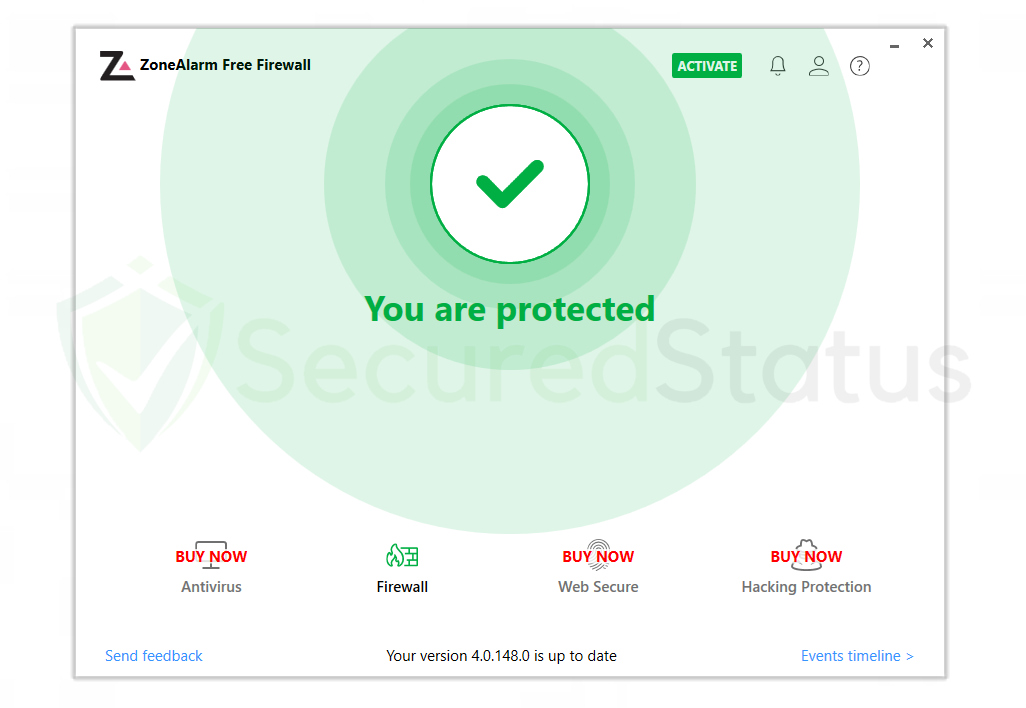
You can also opt for ZoneAlarm Free Firewall as your first line of defense between your device and the internet. The program safeguards your network and blocks any dangers, and you can use the free version of it without paying anything.
It provides a robust two-way protection solution that guards against spyware from disclosing your data online while also hiding your PC from nefarious hackers.
With its cutting-edge anti-bot protection, it also protects your computer from automated cyberattacks in real time.
Additionally, it protects your computer against spam, dubious websites, and many others. Lastly, it provides real-time defense against automated cyberattacks with its cutting-edge anti-bot security.
Bottom Line
While this may appear to be typical advice, we recommend users not visit illegal streaming or torrenting websites and more importantly, download anything from them because doing so may result in the installation of malware and viruses.
Additionally, make sure that your device is protected against sneaky exploits and stealthy cyberattacks. While taking precautions and avoiding dubious websites are crucial, having a solid line of defense is essential to ensuring the security of your network and data.
If you experience another computer issue, please visit our website to find a solution for your problem or get in touch with us, and SecuredStatus will be happy to assist you once again.
